


Stage
Justify your answer!
Type de poste : IA, Sciences et Technologies des langues
Publié le
Supervisors
- Thomas Gerald, Université Paris Saclay, LISN
- Sahar Ghannay, Université Paris Saclay, LISN
Keywords
Natural Language Processing, Question Answering, Visual Question Answering, Corpus annotation, Deep-
Learning
Project Description
A fundamental question in generative textual approaches is to retrieve what part of the internal knowledge or
contextual knowledge is used for the generation.
To illustrate our research question, let us consider the figure below1 and the question ”What are the sources
of Atmospheric sulfur ?”. A short answer could be ”Atmospheric sulfur came from soil decomposition, human
emissions and less frequently from volcanic eruption; to provide this answer, the model should gather specific
information from the figure and the text. Nonetheless, some prior knowledge is necessary, such as linking the
arrow to a flow or process text included in the image.
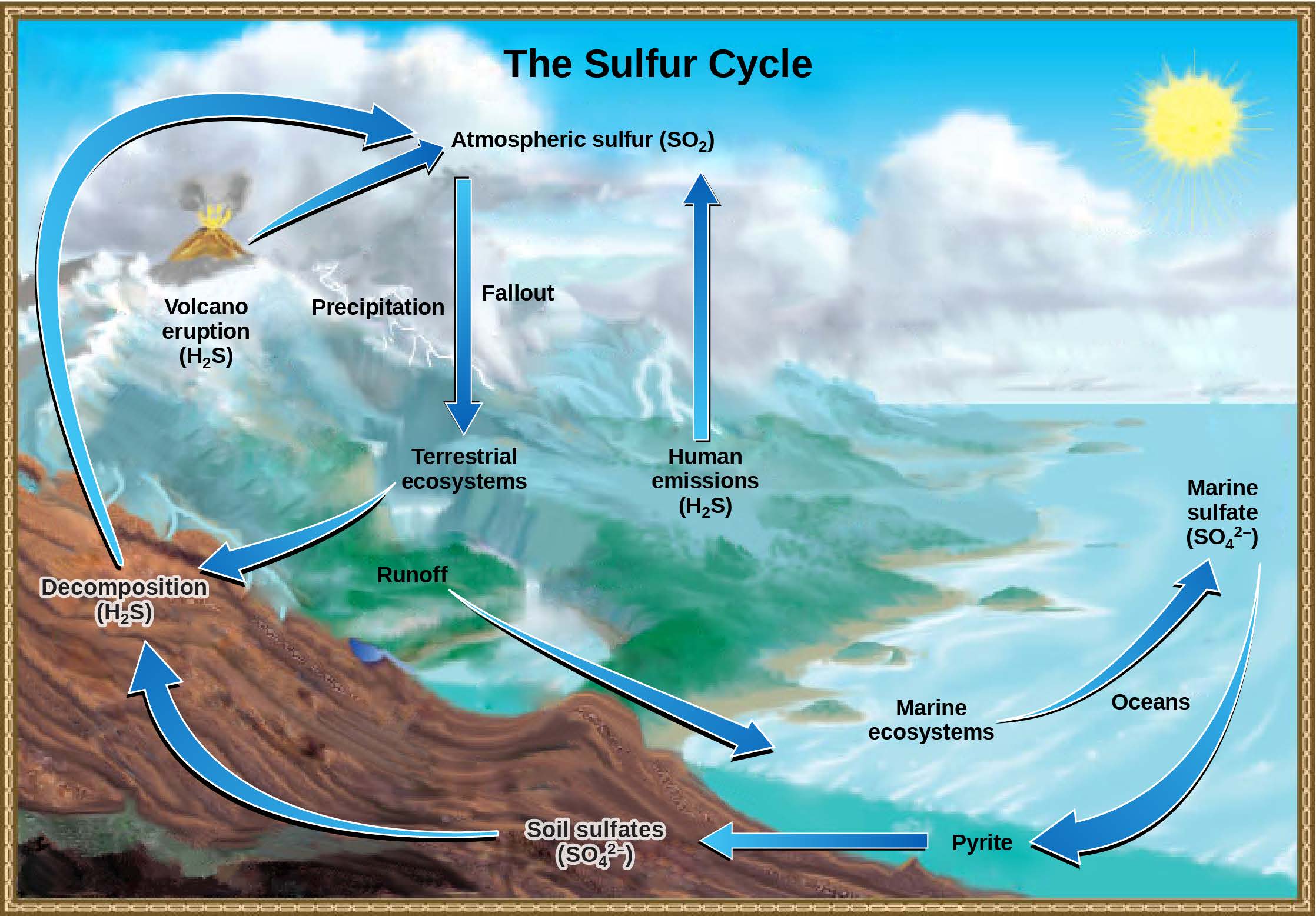
This example illustrates our two objectives: identifying which part of the context the model leverages to
answer the question, and determining which part of preliminary knowledge (from a pre-trained model) is utilised
to answer the question.
Deep learning generative architectures that leverage both text and image have led to substantial improvements
in the complex question-answering task [Radford et al., 2021]. While working efficiently on photographs,
a few approaches are practical when working with complex images or schematics (such as diagrams or maps) in conjunction with textual information. Most importantly, disentangling part of the knowledge serving generation
remains difficult, e.g. does the model use pre-trained knowledge or a specific part of the context? In the literature,
previous studies have begun to explore the topic of explainability. Beyond them, different approaches arose:
observing internal signal in LLMs activation (e.g. attention weights) [Bibal et al., 2022], enforcing generation
of explanation/justification alongside the answer [Wei et al., 2022, DeepSeek-AIArtificial Intelligence et al., 2025] or disentangling
memory from reasoning [Jin et al., 2025]. While these methods may support the content, they are primarily
developed to improve performance, rather than to provide an explanation. The goal of the internship is thus
twofold: to evaluate grounding explanation methods and estimate how these approaches depict the internal
behaviour of the model; and to propose a new framework pipeline that allows for discovering what supporting
context is used for generation and what part leverages internal model capacities or knowledge.
Today, we have gathered a dataset that considers, simultaneously, schematics and text passages collected
from the schoolbook corpus (on biology and history). The first experiments conducted on generating questions
and answers from multimodal documents, alongside an evaluation of specific domain criteria, will serve as a
starting point for the subject.
To discover the context implication in models (versus internal knowledge), the intern could start with a
simple pipeline to measure the impact of the different contexts on the generation, for instance :
- Modify/noising specific part of the context (blurring images, replacing named entities, …)
- Measure the difference in the generated answer with/without noisy context
- Identify signals in activation (or attention mechanisms) correlating to the type of noise
Depending on the advances, experiments to control internal/contextual knowledge in generation would be led.
Internship objectives
The objective of the internship is to develop/propose new explanability methods considering the generation of
question-answer pairs in VLLM approaches. The first month of the internship will be dedicated to producing a
bibliography on explainability in LLMs and VLLMs architectures. To build explainability modules or methods, a
deep understanding of VLLM-like architectures is required. In a second step, the intern will work on a collection
of mid-sized documents (≈ 4000 tokens) and testDéfinition courte Lorem ipsum the different explainability approaches on an education QA
corpus. In the final step, the student will propose a new pipeline for explainability, focusing on the contextual
content involved in generation, and, with the aid of their supervisor, develop a method to evaluate the quality of
the designed methods efficiently. If necessary, a human evaluation campaign could be envisioned to strengthen
the study. A good internship would lead to the realisation of a PhD.
Practicalities
The internship will be funded at 659.76 € per month for a duration of 6 months (starting in February or March
2025) and will take place at the LISN laboratory (CNRS, Paris Saclay).
Candidate Profile
We are looking for highly motivated candidates with a strong interest in academic research and the will to
pursue a PhD. We also require the following qualifications:
- Education: Master’s degree (M2) in Computer Science, with a preference for candidates experienced in
Natural Language Processing (NLP), Computer Vision (CV), or Artificial Intelligence (AIArtificial Intelligence). - Technical Skills:
– Proficiency in Python and familiarity with deep learning libraries such as TensorFlow, PyTorch, or
Keras.
– Experience in data analysis and information extraction tools. - Soft Skills: Strong analytical abilities, an interest in accessibility and human-centric AIArtificial Intelligence, and the ability to
work independently and collaboratively in a research environment.
References
[Bibal et al., 2022] Bibal, A., Cardon, R., Alfter, D., Wilkens, R., Wang, X., Fran¸cois, T., andWatrin, P. (2022).
Is attention explanation? an introduction to the debate. In Muresan, S., Nakov, P., and Villavicencio, A.,
editors, Proceedings of the 60th Annual Meeting of the Association for Computational Linguistics (Volume
1: Long Papers), pages 3889–3900, Dublin, Ireland. Association for Computational Linguistics.
[DeepSeek-AIArtificial Intelligence et al., 2025] DeepSeek-AIArtificial Intelligence, Guo, D., Yang, D., Zhang, H., Song, J., Zhang, R., Xu, R., Zhu, Q.,
Ma, S., Wang, P., Bi, X., Zhang, X., Yu, X., Wu, Y., Wu, Z. F., Gou, Z., Shao, Z., Li, Z., Gao, Z., Liu, A.,
Xue, B., Wang, B., Wu, B., Feng, B., Lu, C., Zhao, C., Deng, C., Zhang, C., Ruan, C., Dai, D., Chen, D.,
Ji, D., Li, E., Lin, F., Dai, F., Luo, F., Hao, G., Chen, G., Li, G., Zhang, H., Bao, H., Xu, H., Wang, H.,
Ding, H., Xin, H., Gao, H., Qu, H., Li, H., Guo, J., Li, J., Wang, J., Chen, J., Yuan, J., Qiu, J., Li, J., Cai,
J. L., Ni, J., Liang, J., Chen, J., Dong, K., Hu, K., Gao, K., Guan, K., Huang, K., Yu, K., Wang, L., Zhang,
L., Zhao, L., Wang, L., Zhang, L., Xu, L., Xia, L., Zhang, M., Zhang, M., Tang, M., Li, M., Wang, M., Li,
M., Tian, N., Huang, P., Zhang, P., Wang, Q., Chen, Q., Du, Q., Ge, R., Zhang, R., Pan, R., Wang, R.,
Chen, R. J., Jin, R. L., Chen, R., Lu, S., Zhou, S., Chen, S., Ye, S., Wang, S., Yu, S., Zhou, S., Pan, S., Li,
S. S., Zhou, S., Wu, S., Ye, S., Yun, T., Pei, T., Sun, T., Wang, T., Zeng, W., Zhao, W., Liu, W., Liang,
W., Gao, W., Yu, W., Zhang, W., Xiao, W. L., An, W., Liu, X., Wang, X., Chen, X., Nie, X., Cheng, X.,
Liu, X., Xie, X., Liu, X., Yang, X., Li, X., Su, X., Lin, X., Li, X. Q., Jin, X., Shen, X., Chen, X., Sun, X.,
Wang, X., Song, X., Zhou, X., Wang, X., Shan, X., Li, Y. K., Wang, Y. Q., Wei, Y. X., Zhang, Y., Xu, Y.,
Li, Y., Zhao, Y., Sun, Y., Wang, Y., Yu, Y., Zhang, Y., Shi, Y., Xiong, Y., He, Y., Piao, Y., Wang, Y., Tan,
Y., Ma, Y., Liu, Y., Guo, Y., Ou, Y., Wang, Y., Gong, Y., Zou, Y., He, Y., Xiong, Y., Luo, Y., You, Y., Liu,
Y., Zhou, Y., Zhu, Y. X., Xu, Y., Huang, Y., Li, Y., Zheng, Y., Zhu, Y., Ma, Y., Tang, Y., Zha, Y., Yan,
Y., Ren, Z. Z., Ren, Z., Sha, Z., Fu, Z., Xu, Z., Xie, Z., Zhang, Z., Hao, Z., Ma, Z., Yan, Z., Wu, Z., Gu,
Z., Zhu, Z., Liu, Z., Li, Z., Xie, Z., Song, Z., Pan, Z., Huang, Z., Xu, Z., Zhang, Z., and Zhang, Z. (2025).
Deepseek-r1: Incentivizing reasoning capability in llms via reinforcement learning.
[Jin et al., 2025] Jin, M., Luo, W., Cheng, S., Wang, X., Hua, W., Tang, R., Wang, W. Y., and Zhang, Y.
(2025). Disentangling memory and reasoning ability in large language models.
[Radford et al., 2021] Radford, A., Kim, J. W., Hallacy, C., Ramesh, A., Goh, G., Agarwal, S., Sastry, G.,
Askell, A., Mishkin, P., Clark, J., Krueger, G., and Sutskever, I. (2021). Learning transferable visual models
from natural language supervision. In ICML, volume 139 of Proceedings of Machine Learning Research, pages
8748–8763. PMLR.
[Wei et al., 2022] Wei, J., Wang, X., Schuurmans, D., Bosma, M., Xia, F., Chi, E., Le, Q. V., Zhou, D.,
et al. (2022). Chain-of-thought prompting elicits reasoning in large language models. Advances in neural
information processing systems, 35:24824–24837.